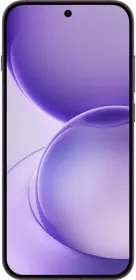
The Oppo Reno16 is the standard model in Oppo's current Reno range, built around three 50MP rear cameras and a battery aimed at buyers who want more than a day of use. It is smaller and lighter than the Reno15 it follows, at 6.32 inches and 188g against 6.59 inches and 197g.
Reno16: Display
The 6.32-inch AMOLED runs at 120Hz and is rated at 1800 nits in high brightness mode. GSMArena measured a 2124-nit maximum against 1188 nits on the Reno15, so outdoor visibility is the clearest gain.
The panel is smaller than the Reno15's 6.59-inch screen, and protection drops from Gorilla Glass 7i to Crystal Guard, Mohs 4 rather than 5.
Reno16: Camera
All three rear cameras are 50MP: a 26mm main with OIS, an 80mm telephoto with OIS and 3.5x optical zoom, and a 116-degree ultrawide with autofocus, replacing the Reno15's 8MP unit.
Reach stops at 3.5x, and the telephoto's smaller 1/2.75-inch sensor means zoom shots are likely to soften in low light.
Reno16: Battery
GSMArena's lab test returned an active use score of 16 hours 45 minutes, slightly ahead of the Reno15's 16 hours 23 minutes. Charging is 80W wired, quoted at 59 minutes for a full charge.
European units use a 6000mAh cell rather than the 6700mAh international version, so endurance may fall below the tested figure. The EU label rates it at 1200 charge cycles against the Reno15's 1600.
Reno16: Size, Weight and Build
At 151.2 x 72.4 x 8.2mm this is compact, with an aluminium frame and rated Class A for free fall at 270 falls, against Class C and 90 for the Reno15.
The back is glass on some versions and composite plastic on others, taking weight to 191g and thickness to 8.4mm, and there are three colours: Pop White, Twilight Violet and Dream Purple.
Reno16: Performance
The Snapdragon 7 Gen 4 comes with 8GB or 12GB of RAM and up to 512GB of storage. Wi-Fi 6 improves on the Reno15's Wi-Fi 5, and it ships on Android 16 with ColorOS 16, so the update window starts from the current release.
Speed is not the upgrade: the Reno15 uses the same chipset and both score 2049 in 3DMark Wild Life Extreme. Storage is UFS 3.1 rather than 4.x, and there is no card slot.
Reno16: Who Should Buy
The Reno16 suits buyers who want optical zoom in a compact body and prefer a brighter, smaller screen to a bigger one. Owners of older mid-range handsets will feel the gains most, while anyone moving directly from the Reno15 gets the same chipset and less screen.
Buyers weighing storage tiers or contract length will find current network pricing in the table above.