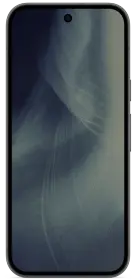
The Google Pixel 11 is the entry point to Google's current flagship range, aimed at buyers who want Pixel camera processing and a long update commitment without moving up to Pro pricing. It arrives with a larger 1/1.56-inch main sensor in place of the Pixel 10's 1/2.0-inch unit, and wireless charging rises from 15W to 25W.
Pixel 11: Display
The 6.3-inch OLED panel runs at 120Hz and is rated at 2000 nits in high brightness mode, which is the figure relevant to outdoor use. The 3000 nits peak rating applies to HDR content only.
Resolution stays at 1080 x 2424, identical to the Pixel 10, so this is not where the generation changes. Buyers who want the sharper 1280 x 2856 LTPO panel on the same 6.3-inch footprint need the Pixel 11 Pro.
Pixel 11: Camera
The 48MP wide moves to a 1/1.56-inch sensor with 1.0µm pixels, up from 1/2.0-inch and 0.8µm on the Pixel 10, which should improve low light capture. The 10.8MP telephoto with 5x optical zoom carries over, and autofocus moves from single-zone to multi-zone laser AF.
Video is capped at 4K60, with 8K reserved for the Pro models. The 13MP ultrawide and 10.5MP selfie camera are unchanged from the previous generation.
Pixel 11: Battery
The 4985 mAh cell is marginally larger than the Pixel 10's 4970 mAh. Wireless charging is the meaningful change, rising to 25W over Qi2.2 magnetic from 15W Qi2, with reverse wired and bypass charging also supported.
Wired charging remains at 30W and is rated for 55% in 30 minutes, the same figure Google quoted for the Pixel 10. Anyone hoping for a faster top-up than the previous generation will not find it here.
Pixel 11: Size, Weight and Build
At 197g the Pixel 11 is 7g lighter than the Pixel 10, with Gorilla Glass Victus 2 front and back, an aluminium frame and IP68 rating. Colours are Frost, Pistachio, Hibiscus and Obsidian.
Dimensions are otherwise identical at 152.8 x 72 x 8.6 mm, so buyers who found the previous model awkward one-handed gain nothing beyond the weight reduction. It is also 0.2mm thicker than the Pro.
Pixel 11: Performance
The Tensor G6 moves to a 2nm process with a 7-core layout led by a 4.1GHz ARM C1-Ultra. Both storage tiers pair 12GB of RAM with UFS 4.x, where the Pixel 10's 128GB tier used slower UFS 3.1. It ships on Android 17 with up to seven major OS updates, a window active from launch.
Connectivity is where the tier shows: Wi-Fi 6e rather than the Pro's Wi-Fi 7, and no UWB support. There is no card slot, so the 256GB tier is worth thinking about carefully.
Pixel 11: Who Should Buy
The Pixel 11 suits the buyer who wants 5x optical zoom and a seven-generation update commitment in a 6.3-inch body, and who does not need the Pro's sharper panel or 8K video. Buyers on older Pixels gain most from the larger main sensor and the jump to 25W wireless charging. Buyers comparing on contract length or upfront cost will find current network pricing in the table above.